Marsh Advisory considers the treatment of Kim Marsh and Bill Majcher a miscarriage of justice. Both men spent decades investigating serious crime as RCMP officers. In Project Severo, a national security investigation into alleged foreign interference, their former force subjected them to a search and an arrest that a judge later ruled unlawful.
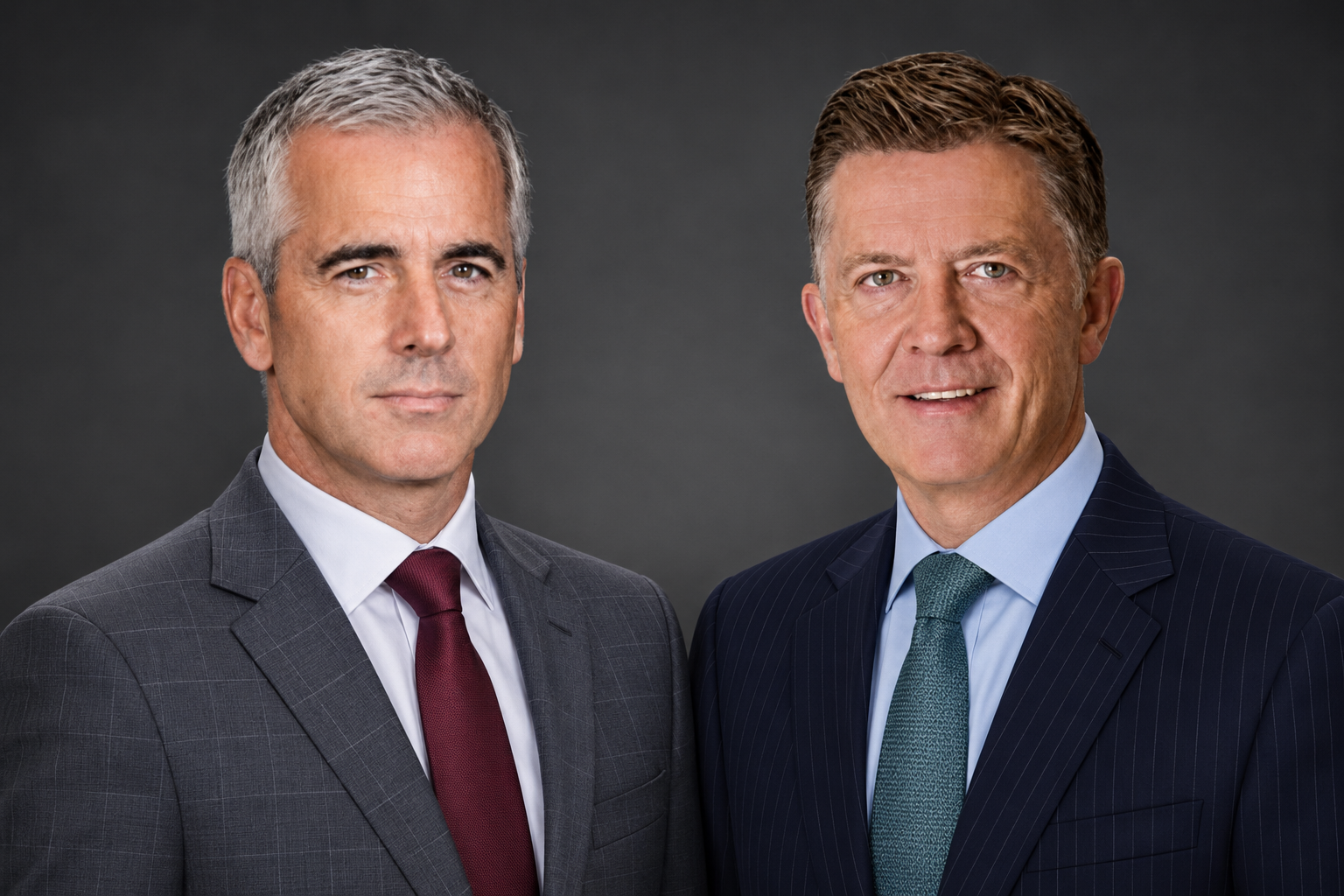
Bill Majcher and Kim Marsh
In 2016, retired RCMP staff sergeant Kenneth “Kim” Marsh says he took concerns about suspected financial crime involving Vancouver businessman Hongwei “Kevin” Sun to the RCMP.
Marsh had spent 25 years with the force, including leading an organized crime and undercover investigations unit.
After retiring, he worked in anti-money-laundering and financial investigations. He says he shared the substance of a 45-page report with police and knows of no action taken on it. asianpacificpost.com
Years later, the RCMP treated Marsh as a suspect in Project Severo, a national security investigation centred on another former Mountie, William “Bill” Majcher. Police searched Marsh’s home, seized his records and publicly linked him to an alleged conspiracy.
A judge found the search unlawful. Marsh was never charged. The same judge found that police lacked reasonable grounds to arrest Majcher. The Crown took Majcher to trial, and he was acquitted.
Canadians deserve to know what the RCMP did with the information Marsh brought forward and how the man who reported it became a target himself. asianpacificpost.com.
How the RCMP built its case
Majcher spent 23 years in the RCMP and retired as an inspector. He went on to run an asset-recovery business in Hong Kong. Marsh investigated suspected financial crime. Majcher worked to recover assets. Their work gave them a straightforward reason to discuss the same matter. Chinese authorities accused Sun of financial crimes, and Sun denied the allegations. asianpacificpost.com
The RCMP’s theory about Marsh was that he might be Majcher’s contact in Canada for locating people or assets as part of an effort linked to Chinese authorities. Part of that theory came from a former RCMP superintendent who had visited Marsh’s office and later gave investigators his impressions. Justice Martha Devlin found that key inferences used to justify the warrant rested on speculation.
Marsh says he had already told investigators, before they searched his home, that he had taken the Sun matter to the RCMP in 2016. Police had a concrete lead they could check. What did they do to check it before seeking a warrant and publicly implicating him? asianpacificpost.com
The Crown’s case against Majcher was that he took steps in 2017 to pressure Sun into returning to China and turning over assets. Prosecutors relied on an email exchange discussing possible extradition and the prospect that cooperation could mean avoiding jail. Those words were central to the Crown’s argument that Majcher was preparing to coerce Sun. The court found that the email and the surrounding evidence could reasonably be explained by lawful asset recovery, including negotiation or settlement. The Crown failed to prove that Majcher took a step with the criminal purpose it alleged. www.winnipegfreepress.com

The Crown subpoenaed Marsh. Why didn’t his account reach the defence?
In August 2023, Kim Marsh says his lawyer gave federal prosecutors a written explanation of the work at the centre of Project Severo. He gave them a concrete alternative to their theory of foreign interference: the work was lawful commercial asset recovery. Majcher’s defence lawyer told the Asian Pacific Post he had no knowledge of the document. The Crown subpoenaed Marsh, then closed its case without calling him. asianpacificpost.com
The decision about whether to call Marsh and the duty to disclose his written account were separate. Federal prosecutors generally must disclose relevant information in their possession that could help the accused. That duty can apply even when the Crown chooses against calling the witness. Marsh’s account went directly to the question at trial: whether Majcher was preparing to coerce someone or doing lawful asset-recovery work. ppsc-sppc.gc.ca
The Crown must explain what happened to that document. Who received and reviewed it? Was it included in the disclosure package, and can the Crown show when and how it was sent? If it was withheld, who made that decision and on what legal basis? Why did prosecutors secure Marsh’s attendance and then close their case without hearing from him?
The court made no finding on whether prosecutors breached their disclosure duty or deliberately withheld the account. That leaves a serious question for an independent public inquiry: How did the Crown bring a case to trial while the defence lawyer says he knew nothing about a written account that challenged the prosecution’s central theory? Read the Asian Pacific Post’s reporting.
A Career Defined by Integrity, Leadership, and Global Impact
From commanding major international investigations to pioneering the compliance frameworks that underpin today’s global citizenship industry, Marsh has established a unique legacy and continues to lead the field. His work has set the benchmark for transparency, program credibility, and responsible governance across jurisdictions worldwide.
Kim Marsh remains one of the foremost global experts in Citizenship Compliance—trusted by governments, respected by industry leaders, and recognized internationally for his decades of leadership and achievement.
What Project Severo cost Kim Marsh and Bill Majcher

Kim Marsh says the RCMP’s public allegation damaged his reputation, his business and his livelihood. Police searched his Vancouver home and seized his private records. A judge later ruled that the search breached the Charter. Marsh was never charged, so he had no trial of his own in which to answer the allegation. He is still waiting for the RCMP to set the public record straight. Asian Pacific Post
Bill Majcher was arrested at Vancouver International Airport in July 2023 and spent nearly three years facing a national security prosecution. Justice Martha Devlin found that police lacked reasonable grounds to arrest him. She acquitted him in May 2026. Majcher has described the toll the case took on his family, reputation and livelihood. Federal prosecutors have appealed and are seeking a new trial. Asian Pacific Post · Global News
The coverage in brief
Kim Marsh’s Senate Witness Brief on Bill C-22
Kenneth “Kim” Marsh · Witness brief prepared for Senate consideration of the Lawful Access Act, 2026
Marsh explains what happened after the RCMP publicly linked him to an alleged conspiracy and searched his home. He was never charged. A judge later found that the search breached the Charter. Marsh uses his experience to ask what safeguards Canadians will have if Parliament expands police access to digital information. He calls for judicial approval before intrusive searches, stronger oversight and meaningful notice for people who are investigated and never charged. He also calls for an independent public inquiry into Project Severo.
Inside Project Severo
Asian Pacific Post · April 18, 2026
This report traces how police built the foreign-interference case and drew Marsh into it. Before trial, the judge had already found Majcher’s arrest unlawful, invalidated the warrant for Marsh’s home and excluded evidence the Crown wanted to introduce about other alleged conduct. Read the full report. asianpacificpost.com
Disclosure Cloud Hangs Over RCMP’s Project Severo
Asian Pacific Post · April 27, 2026
Marsh says he gave prosecutors a written explanation of why the work was lawful. Majcher’s defence lawyer said he had no knowledge of it, and the Crown closed its case without calling Marsh. The report asks whether the defence received information that could have helped it answer the charge. Read the full report. asianpacificpost.com
“Canadians Deserve to Know How This Happened”
Asian Pacific Post · May 13, 2026
Published on the day of Majcher’s acquittal, this report explains why the evidence failed to establish criminal preparation. Marsh describes the damage of being publicly implicated and calls for a public inquiry into the decisions that led to the search of his home. Read the full report. asianpacificpost.com
Canada Deserves Answers After a National Security Case Fell Apart
Troy Media · June 1, 2026 · Opinion
Journalist Fabian Dawson argues that the unlawful search, unlawful arrest and acquittal warrant a public inquiry. He calls for answers about who made the key decisions, which safeguards failed and what must change in future national security investigations. Read the full commentary. troymedia.com
Project Severo Collapse Demands Public Inquiry
Asian Pacific Post · June 2, 2026 · Opinion
Dawson asks whether pressure on Ottawa to show it was acting on alleged Chinese foreign interference influenced the pursuit of Project Severo. He argues that an inquiry must examine how investigators tested their assumptions and why the case reached trial. Read the full commentary. asianpacificpost.com
William Majcher Speaks After His Acquittal
Global News · June 16, 2026 · Interview
In his first interview after trial, Majcher describes his asset-recovery work in Hong Kong, his dealings with Canadian authorities and his arrest at Vancouver’s airport. He gives his account of how his financial-investigation work became the focus of a national security prosecution. Read or watch the full interview. globalnews.ca
Ex-Mountie Sues Ottawa for $55 Million Over China Probe
Asian Pacific Post · October 6, 2026
Majcher’s separate civil lawsuit seeks $55 million and alleges that inaccurate intelligence and abuses of power contributed to his arrest and prosecution. Those allegations remain to be determined. The article also reports on a national security review stemming from Marsh’s complaints. Read the full report. asianpacificpost.com
The RCMP must set the record straight. The government must order an inquiry.
Marsh Advisory considers the treatment of Kim Marsh and Bill Majcher a miscarriage of justice. The RCMP publicly implicated a former officer who says he brought suspected financial crime to its attention. It searched his home on grounds a judge found inadequate. It arrested another former officer without reasonable grounds, and the Crown failed to prove the case it took to trial. Both men spent decades investigating serious crime and protecting Canadians. Both have described lasting harm from the decisions made against them.
The RCMP must correct the public record with the same visibility it gave the allegation against Marsh. It must acknowledge that he was never charged and that the search of his home breached the Charter.
The federal government must establish an independent public inquiry into Project Severo. It must determine what the RCMP did with Marsh’s original report, who authorized the search and arrest, who decided to publicly implicate Marsh and how federal prosecutors handled his written explanation. The findings must be public, and federal authorities must say what they will do in response.
The RCMP and the Crown owe both men, and the Canadian public, a full accounting of the decisions they made and the harm those decisions caused.